
Most people go freelance for the work itself. The independence, the flexibility, the chance to do the thing you’re good at properly, rather than a watered-down version of it inside someone else’s structure. Maybe the 9-to-5 never really fitted you anyway.
Then the other jobs turn up. Chasing payments, doing your books, finding the next client, fixing the laptop the night before a deadline. Nobody hands you a job description for those, and nobody pays you for them either. They just land on top of the work you’re actually there to do.
The thing you love is a smaller percentage of your week than most people expect.
The numbers are sobering
Most freelancers only bill between 50% and 70% of the hours they work. The rest goes on admin, marketing, invoicing, proposals and professional development: everything that keeps the business running but never appears on an invoice. Admin and accounting alone take around six hours a week for almost half of freelancers. That’s close to working every Friday for free.
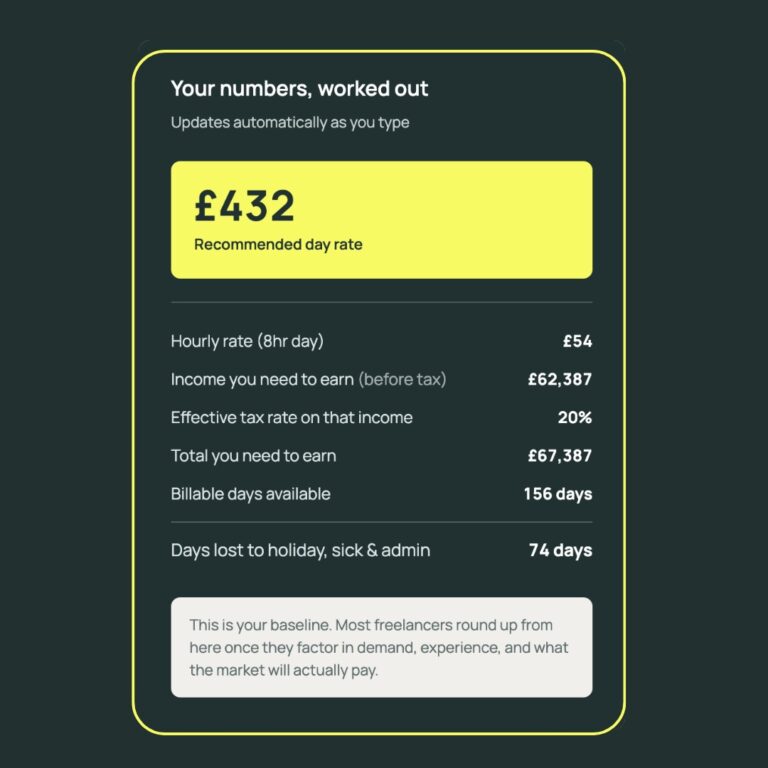
And here’s what that means for your rates: your day rate isn’t really your day rate. Say you charge £300 a day and bill three days out of five. That’s £900 for a full week’s work, or £180 a day in real terms. Most freelancers, when they sit down and actually track their time, are surprised by the gap.
The part that’s harder to measure
The non-billable stuff doesn’t just eat your time. It eats your energy.
There are the hours and tasks – the quantifiable part. But harder to manage is the mental load of carrying all of it. The background hum of things not done yet. The invoice you keep meaning to chase. The tax return that’s not due for months but sits at the edge of your mind. The feeling of being slightly behind, even on the weeks when you’re technically on top of it.
I learned this the hard way. I’ve been self-employed since 2018, and for years my answer to everything was to push through. When I became a single foster carer and a four-year-old moved in, I pushed through that too, right up until I could feel burnout closing in. I was running on empty and knew something had to give.
What helped was letting go of one thing: outsourcing the admin for the North East Freelance Network to a VA. It costs more than the network brings in. But the relief of having those ten hours off my plate – and the mental weight that went with them – outweighed the cost. Sometimes the value of help isn’t just the time it saves you. It’s the headspace it gives back.
Five things that actually help
- Track it before you try to fix it. One week of logging everything – billable and non-billable – is usually a wake-up call. You can’t manage what you don’t measure.
- Find a system that fits your brain and stick with it. Not the most aesthetic one. The one you’ll actually open on a tired Tuesday afternoon. Simple and consistent beats beautiful and abandoned.
- Automate the repeatable stuff. Invoice reminders, time tracking, tax savings pots. What are you still doing manually that a tool could handle?
- Build non-billable time into your pricing. If a third or more of your week is non-billable, your rate needs to reflect that. You’re charging for your expertise and the full cost of running a business – not just the hours that appear on an invoice.
- Ask for help before you hit the wall. A VA, an accountant, a community, a conversation with another freelancer who’s figured something out. Ask before you need it desperately.
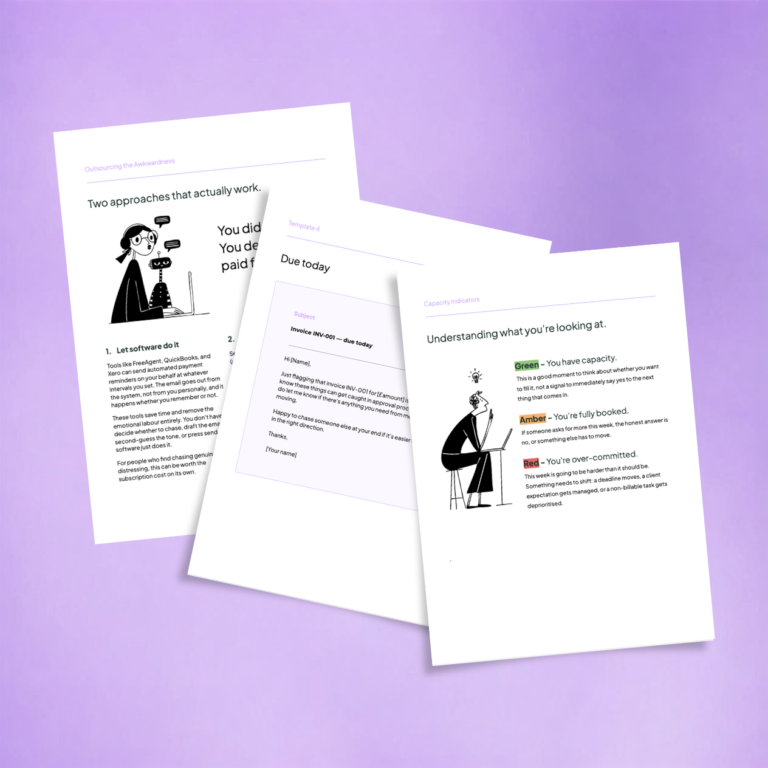
The resources in this hub are here to make the boring stuff more manageable – so you can spend more of your time on the work that made you go freelance in the first place. If you want the actual templates and spreadsheets I use, they’re in The Boring Bits: £49 on Gumroad.
Jade Gillham is a freelancer and founder of the North East Freelance Network (NEFN). She’s been self-employed since 2018, specialising in PPC and LinkedIn Ads.